EPDM with reduced carbon footprint
Reduces environmental impact
Thanks to unrivaled R&D capabilities, Trelleborg’s range of ethylene-propylene-diene monomer (EPDM) elastomers have a significantly lower environmental impact, while offering equivalent performance to traditional EPDM.
High-performance EPDM with less environmental impact
In its commitment to a more sustainable future, the global industry is looking for a new generation of elastomers with a lower environmental impact. The new range of EPDM elastomers represents a breakthrough in sustainability. They make it possible to manufacture final components with a reduction of up to 55% in the product’s carbon footprint, without compromising performance compared to traditional EPDM elastomers.
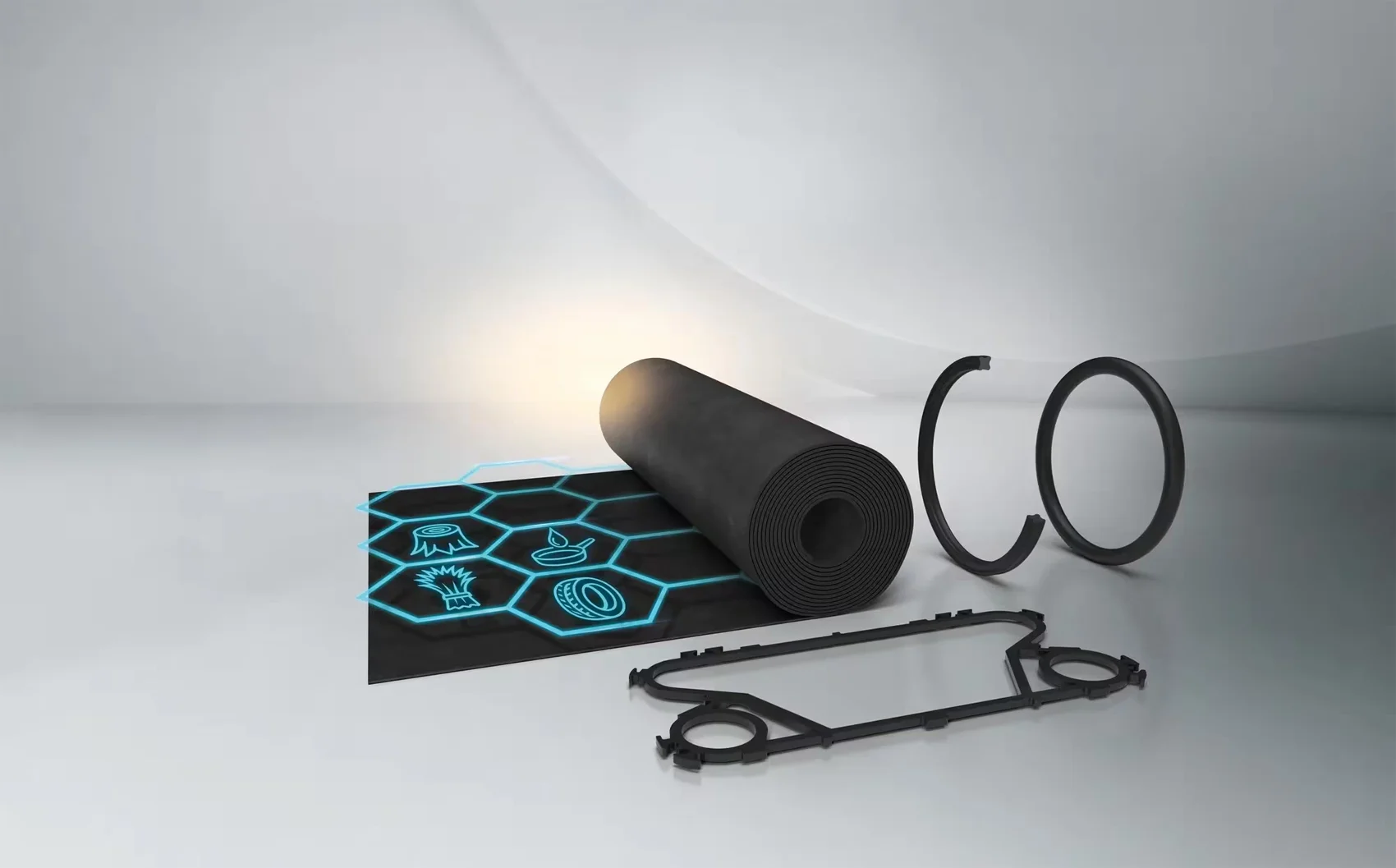
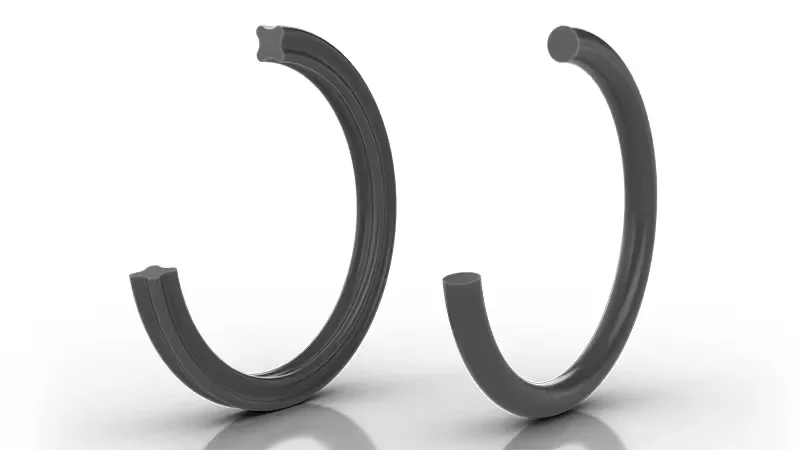
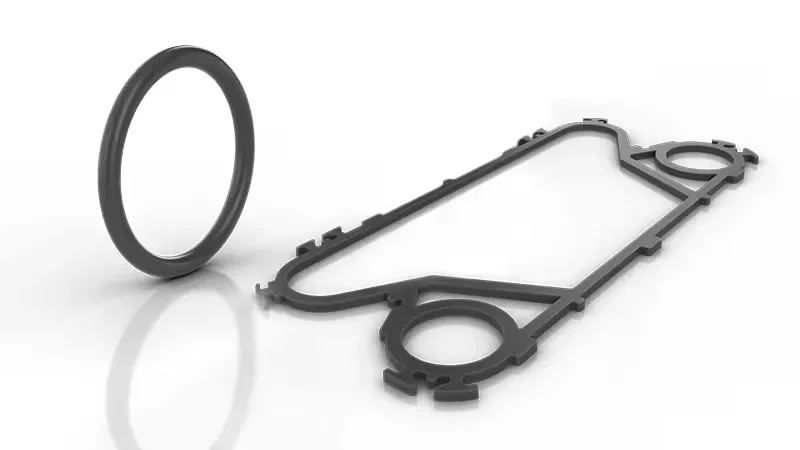
Available in the form of O-rings and engineered molded parts for a wide range of industrial applications, they offer…
Features and benefits of EPDM with reduced carbon footprint
EPDMs with reduced carbon footprint offer environmental benefits while meeting the stringent performance standards demanded by industries worldwide.
- Significantly reduced environmental impact, with a reduction in GWP of up to 55%.
- Performance characteristics equivalent to fossil EPDMs
- Formulated from renewable, non-fossil raw materials and with a higher recycled content.
- Versatile product range: available in a wide selection of products, including O-rings, seals and engineered molded parts.
- Broad industrial application: perfectly suited for all general industrial segments, from automotive and transportation to energy and manufacturing.
- Sustainability verified…
EPDM with reduced carbon footprint

ET711
E7T11 is a 70 Shore A black EPDM suitable for compression and injection molding. In compound form, its carbon footprint is 51% lower than that of traditional EPDM. As a typical molded gasket, it has a carbon footprint reduction of up to 33%. E7T11 offers application performance characteristics equivalent to traditional EPDM.
E8T12
E8T12 is an 80 Shore A EPDM compound suitable for compression molding. Compared to a traditional EPDM compound, E8T12 has a 61% lower carbon footprint. As a finished molded gasket, it offers a carbon footprint reduction of up to 55%. E8T12 retains all the essential characteristics for industrial applications.
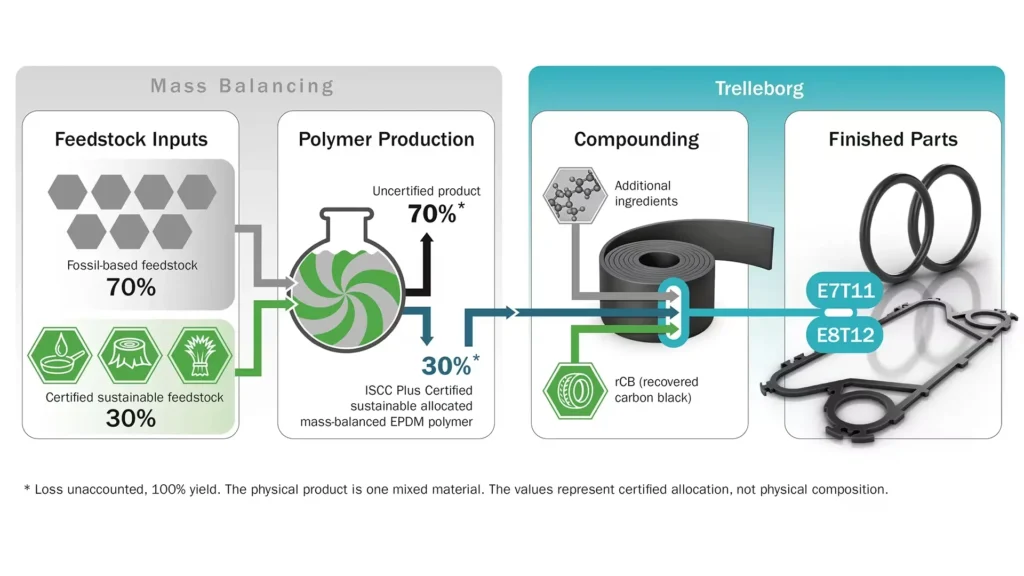
From raw material to finished gaskets
Technical questions and answers
Do EPDMs with a lower carbon footprint compromise performance?
No, these elastomers offer application performance characteristics equivalent to traditional EPDM.
What renewable raw materials are used in EPDM elastomers with a reduced carbon footprint?
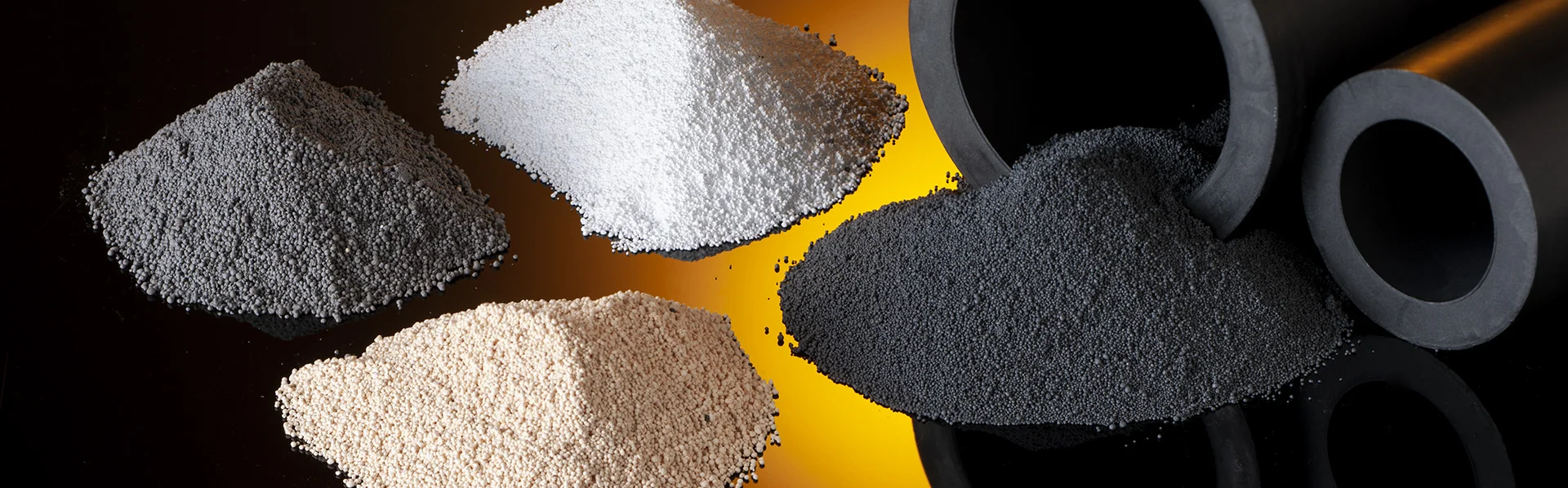
We use bio-circular raw materials derived from renewable sources, such as used cooking oil, forestry residues and resin oil. Recycled fillers from end-of-life tires are also included.
How do these elastomers contribute to reducing a product's carbon footprint?
By replacing fossil-based raw materials with bio-based and recycled raw materials, these advanced solutions significantly reduce the carbon footprint of products.
Where are EPDM elastomers with reduced carbon footprint used?
Reduced carbon footprint EPDM elastomers are used in sealing applications in sectors such as automotive, energy, water management and industrial manufacturing, where both durability and environmental performance are critical.